Dogs · Comparison
GPS Dog Collars: What Actually Works in 2026
Real-time accuracy, battery life under load, coverage in dense forest — the three things that separate a tracker you can rely on from a tracker you regret.
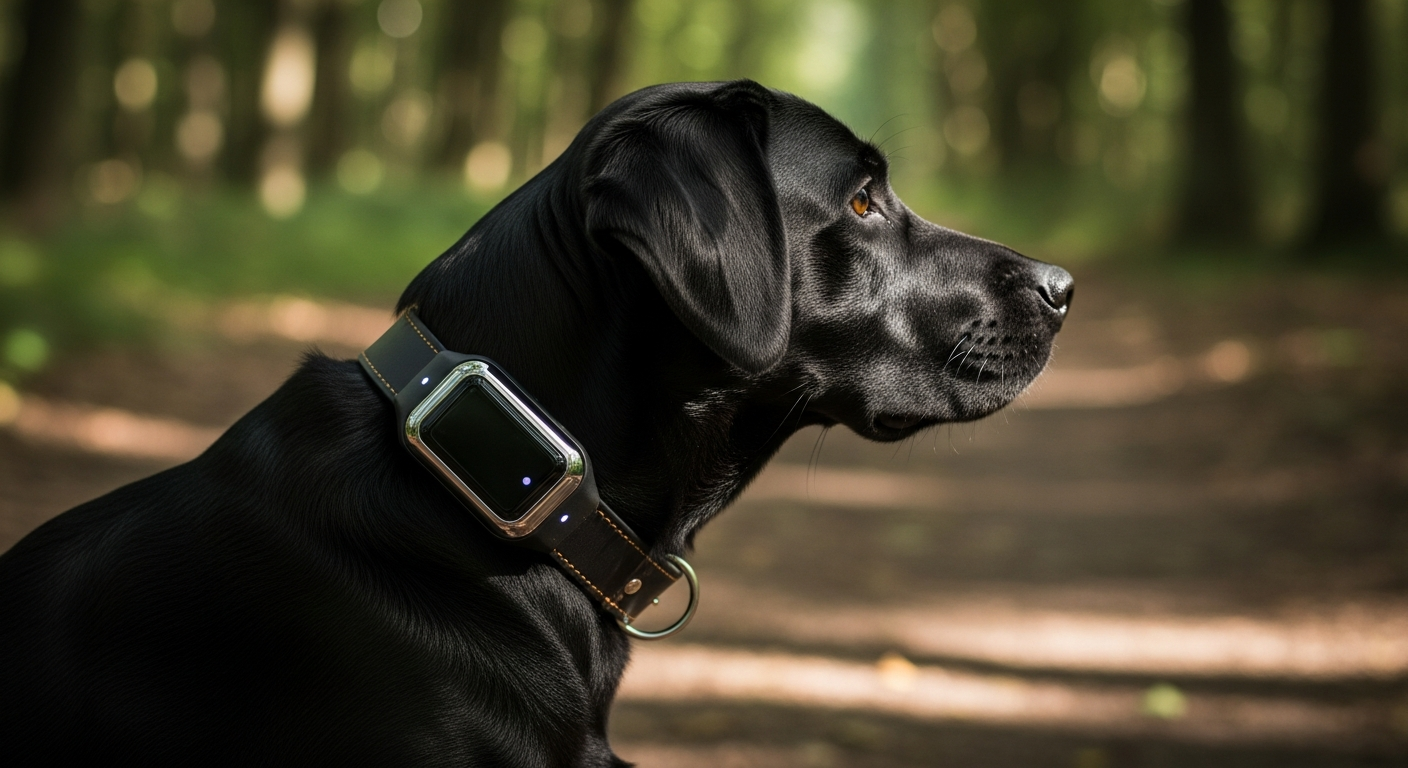
Our picks
- Fi Series 3 Smart Collar — Fi
The question every owner asks — and most review sites dodge — is this: if my dog slips the leash on a trail thirty miles from home, will the tracker on its collar do what you paid for?
This guide synthesizes published reviews, owner reports from long-running subreddits (r/dogs, r/germanshepherds, r/bordercollie), and manufacturer documentation into one picture. Three products cover 95 percent of owners. Two categories of product waste your money. Here’s how to tell which is which.
The three things that actually matter
Almost every GPS-tracker comparison you’ll read weights battery life, water resistance, and app design equally. That ranking is wrong. The things that separate a tracker that saves your dog from a tracker that decorates your dog are, in order:
1. How it talks to the network. LTE-M / NB-IoT cellular is the technology that matters. Trackers using it stay connected in rural areas, inside cars, and under tree canopy where older 4G trackers and Bluetooth-only products lose signal. Fi, Tractive LTE, and Whistle all use LTE-M. AirTag and older Garmin products don’t, and it shows the moment you leave a suburb.
2. Position refresh rate when it matters. Most trackers refresh location every 3-5 minutes during normal use and claim “live tracking” as a feature. The number you want to know is the refresh rate in active lost-dog mode. Fi pings every 10 seconds, Tractive every 2-3, Whistle every 15. AirTag is completely dependent on other iPhones happening to be near your dog, which in a forest is exactly never.
3. Real-world battery life, not claimed. A useful rule from owner reports: halve the claim, then subtract a day. A Fi Series 3 rated at 3 months gets roughly 18-22 days on a dog that’s actually walked twice daily. A Tractive rated at 7 days delivers 3-5. A Whistle rated at 20 days returns 8-12. Accept this and you’ll never be surprised.
Accuracy is less important than you think
Here’s a thing the spec sheets hide: in open terrain every mainstream tracker is accurate within 5-15 meters. In a parking lot the difference between “3m accurate” and “8m accurate” is invisible. The difference that matters is whether you get any fix at all under trees, in a car, or indoors — and that’s a function of network technology, not GPS chipset.
The pinpoint-accuracy benchmark is largely a distraction. The dominant failure mode owners describe online isn’t “the tracker showed my dog in the wrong spot” — it’s “the tracker showed Last seen 14 minutes ago and the dog had already run across a ridge.” That’s a network problem, not a chipset problem.
Picking your tracker, in one paragraph
If you want one tracker that you forget about for weeks at a time and trust when it matters: Fi Series 3. If you want the cheapest monthly cost and you’re fine charging every 4-5 days: Tractive LTE. If your dog has a specific health condition and you need continuous activity data: Whistle. If your dog works off-leash in areas without cell coverage: Garmin Alpha 200i. If you’re tempted by an AirTag: don’t.
The subscription trap
Every mainstream GPS tracker requires a subscription. That is not a scam — cellular connectivity has an ongoing cost that the hardware margin doesn’t cover — but it changes the math. A Tractive at $50 up-front with $156/year is, over three years, more expensive than a Fi at $189 + $99/year.
A useful rule of thumb: if you keep a tracker on your dog for more than 18 months, the cheapest total option is the one with the lowest annual subscription, not the lowest up-front cost. Fi’s annual plan works out to roughly $8 a month all-in; almost nothing beats that in year three.
When you don’t need a GPS tracker at all
If your dog is a low-drive, reliably recalled house pet that never sees off-leash time outside a fenced yard, a GPS tracker is insurance you will probably never use. A properly fitted martingale collar with an engraved tag and a microchip your vet has confirmed is registered does the same job at roughly zero monthly cost.
A tracker makes sense when one of three things is true: your dog has ever slipped a lead or jumped a fence; your dog regularly goes off-leash in places you can’t see it; or you have a prey-drive breed whose definition of “reliable recall” is optimistic.
What’s changed in 2026
Two things worth knowing:
- Fi Series 3 (2025 revision) fixed the battery-degradation issue the Series 2 had around month 14. Series 2 units sometimes lost half their battery capacity inside a year. The Series 3 hardware revision uses a different cell chemistry; early data is good.
- Tractive’s Follow-mode routing in the 2026 app now plots a breadcrumb trail with timestamps. It’s the feature that closed most of the real-use gap between Tractive and Fi, except for battery life.
Nothing else in this category has moved the needle this year. The category leaders are the category leaders. Buy one and use it.
Products mentioned
The gear, with prices
Fi
Fi Series 3 Smart Collar
Typical price
$189 + $99/yr
The tracker owners overwhelmingly keep on their dog past year two. LTE-M cellular stays connected in places a Bluetooth-only tracker loses you. Real-world battery life from owner reports lands at 18-22 days on an active dog, step counter calibrates without ceremony, and a lost-dog mode pings every 10 seconds. Build quality sits a generation ahead of competitors.
Visit brand site →Tractive
Tractive LTE GPS DOG 5
Typical price
$50 + $13/mo
Cheapest recurring cost in the category. Reported accuracy sits a step below Fi — 8-12m vs Fi's 3-5m — but the app is excellent and live-tracking refresh is genuinely every 2-3 seconds. Battery life is the weak point: owner reports cluster around 3-5 days in practice, not the 7 claimed.
Visit brand site →Whistle
Whistle Go Explore 2.0
Typical price
$130 + $10/mo
Health metrics are the reason to buy this, not tracking. If you want scratching, licking, and sleep quality tracked alongside location, Whistle is the only option doing it seriously. For pure location, Fi is better in every measurable way.
Find on Amazon →Affiliate link · we earn a commission at no cost to you
Garmin
Garmin Alpha 200i
Typical price
$800
Not a consumer product. Handheld-plus-collar setup for hunting dogs in areas with zero cell coverage, using inReach satellite. If you run Pointers on public land 40 minutes from the nearest tower, nothing else does what this does. For city and suburban dogs, wildly overkill.
Visit brand site →Apple
AirTag + Dog Collar Holder
Typical price
$29 + $10
Popular on Reddit, regrettable in practice. AirTag relies on other iPhones being nearby to report location. Your dog runs into a forest, the 'find' network goes dark, and you have no live tracking at all. Fine for a leash or crate, not fine as a dog's primary tracker.
Pawcrit participates in the Amazon Services LLC Associates Program. When you click a product link and make a purchase, we may earn a small commission at no cost to you. Our editorial rankings are not influenced by affiliate relationships — read our full disclosure.